
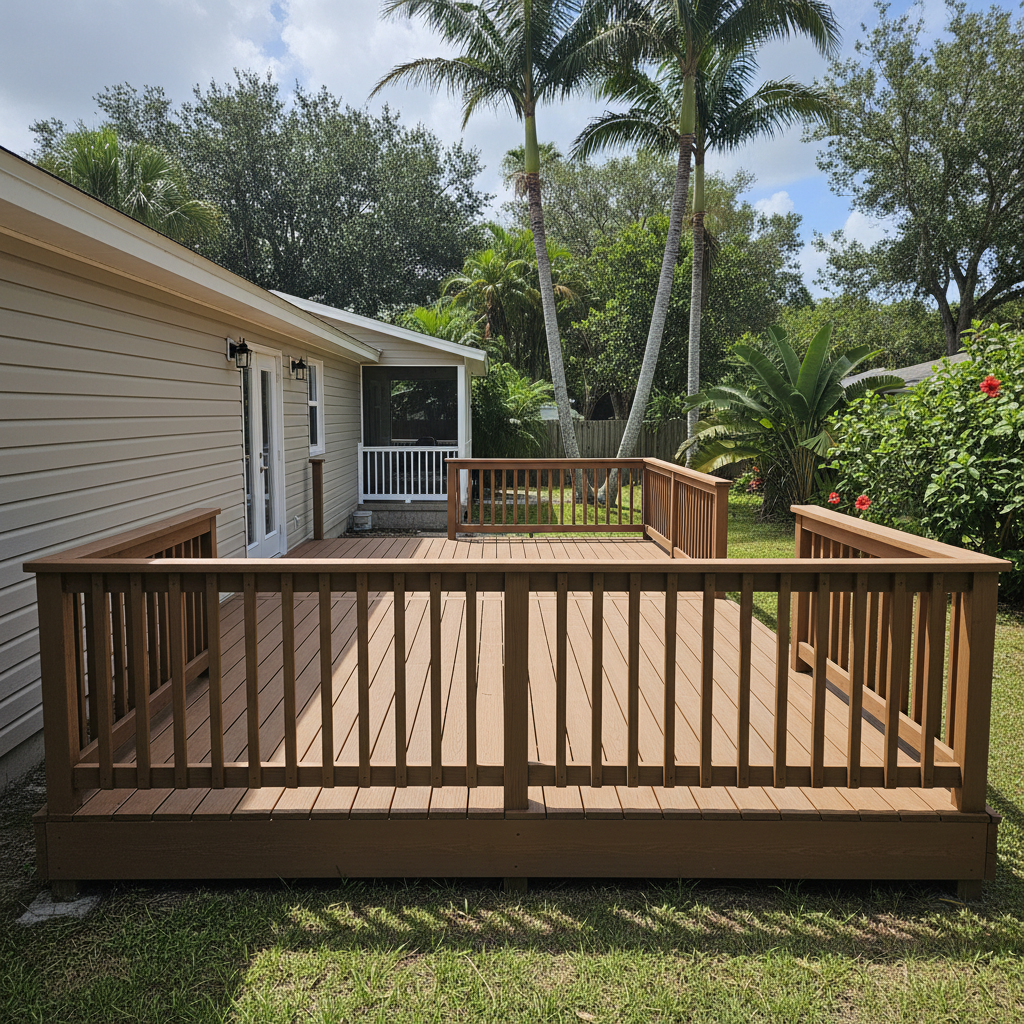
Pinellas County peninsula living means your deck fights two things most of the country doesn't worry about as much: standing water a few feet down and salt in the air year-round. A deck builder who's only worked inland jobs can still frame a nice-looking deck here. Whether it's still standing in eight years is a different question.
Start with the permit, not the price
Any deck attached to the house, and most freestanding ones over a certain height, needs a permit in St. Petersburg and the surrounding municipalities. That's not red tape for its own sake. The inspector is checking footing depth, ledger attachment, joist spacing, and railing height against the Florida Building Code, which in this wind zone is not a casual document. Pinellas County sits in a region rated for 150 mph design wind speeds in a lot of areas, and that number drives how railings, posts, and connections get specified.
Ask straight out: will you pull the permit, or is that on me? If a contractor says the permit isn't necessary for a deck this size, that's usually wrong, and it's worth checking with the city's building division yourself before you sign anything. A builder dodging the permit is also dodging the inspection, and the inspection is the only independent check that your footings are deep enough and your ledger bolts are where they need to be.
What the ground here actually does
Most lots in St. Petersburg sit on sandy soil, which drains fast and doesn't heave the way clay does up north. That sounds like an easy win, and in some ways it is, no frost line to dig below. But the water table here runs shallow, especially closer to Tampa Bay and in older neighborhoods like Old Southeast or Shore Acres that sit at low elevation. Dig a footing hole in the wet season and you may hit water at 2 feet.
Footings still need to land on solid, undisturbed soil, typically 12 to 18 inches below grade at minimum, sometimes deeper depending on the engineer's spec and the load the deck carries. A builder working fast will pour on soft, waterlogged fill and call it done. Over a few years that post settles unevenly, and you get a deck that's noticeably out of level on one corner. If your lot was filled in decades ago, which is common on older streets near downtown and in neighborhoods built up from marsh or low ground, that risk is higher, and a good contractor will ask about it before digging rather than finding out the hard way.
Salt air eats the wrong hardware fast
This is the detail that separates someone who's built decks in St. Petersburg from someone who's built decks somewhere else. Standard galvanized screws and brackets corrode faster here than they would 50 miles inland, especially within a mile or two of the water. Within a few years you can see rust streaks bleeding out of joist hangers, and eventually the fastener itself weakens.
Ask what grade of stainless steel they use for fasteners near the coast. 305 or 316 stainless holds up to salt exposure; cheaper coated screws don't, no matter what the box says about being rated for treated lumber. The same goes for structural screws versus nails at the ledger board, and for the flashing between the ledger and the house, which needs to shed water, not trap it against the rim joist. A rotted ledger is one of the most common deck failures around here, and it almost always traces back to missing or badly installed flashing.
Composite decking handles the humidity and UV better than most woods, but it isn't immune to heat. On a 95-degree July afternoon, dark-colored composite boards can get hot enough to be uncomfortable barefoot, and they expand more than people expect. Gapping between boards has to account for that movement or you'll get buckling by the second summer.
Questions worth asking before you sign
- Are you licensed with the state, and can I see the license number?
- Who's pulling the permit, and what inspections happen along the way?
- What's your footing depth going to be, and how did you decide on it?
- What fastener grade are you using, and is it rated for coastal exposure?
- How do you flash the ledger board against the house?
- How long before I can walk on it, stain it, or put furniture on it?
That last one has real answers. Pressure-treated lumber usually needs 4 to 8 weeks to dry out enough to accept stain or sealant properly, depending on how wet it was when it was installed and how much sun it gets. A builder who offers to stain it the same week it's built either doesn't know that or doesn't care, and either way the finish will fail early, usually peeling within a year.
The red flags that mean walk away
A bid that's dramatically lower than the others is usually lower because something is getting skipped, often the permit, the footing depth, or the fastener grade, none of which you can see once the decking goes down. Cash-only deals and no written contract are a bad sign on any home project, but especially on something structural that's going to sit outside in sun, rain, and salt air for the next 15 or 20 years.
Be wary of anyone who can't tell you how they're attaching the deck to the house, or who shrugs off questions about hurricane season. Deck framing built light, with undersized post bases or missing hurricane ties, is the kind of thing that looks fine until a tropical storm in September puts real wind load on it. Pinellas County inspectors check for this specifically because it's a known failure point here, not a hypothetical one.
If you're in an HOA community, newer subdivisions especially, check your covenants before you get too far into design. Some HOAs have their own approval process on top of the city's permit, and that can add a few weeks to the timeline if nobody checks ahead of time.
None of this is complicated once you know to ask. It just takes a builder who's actually dealt with sandy footings, salt corrosion, and the local wind code, not someone reciting a national playbook that was written for a different climate. If you want to talk through what a specific lot or an older slab needs before committing to anything, that's the kind of conversation Valor Deck Company has with homeowners here every week.